
The launch of the first EELISA Joint Academic Call marks a significant step forward in strengthening academic collaboration across the Alliance. By encouraging the development of ECTS-bearing academic activities and other formally recognised outputs, the call creates new opportunities for cross-institutional cooperation while directly supporting the implementation of the EELISA Joint Education Roadmap—the Alliance’s shared strategy to enhance mobility, recognition, and joint educational development.

Initiated by the EELISA Governing Board, the roadmap provides a structured framework to guide academic cooperation across partner institutions. It aligns closely with the broader ambitions of the European Universities initiative, fostering more integrated curricula, facilitating student mobility—both physical and virtual—and advancing common approaches to recognition and programme development.

Building on this strategic foundation, the Joint Academic Call invites faculty, researchers, and academic staff from at least two EELISA institutions to collaborate on pilot projects that combine academic excellence with long-term impact. The objective is not only to experiment with new formats, but to create sustainable academic offerings that can be embedded into regular curricula and scaled across the Alliance.

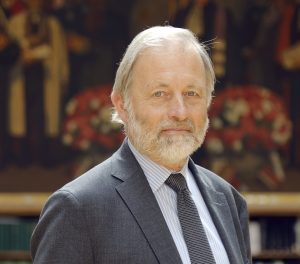
To explore the ambition behind the call and its potential impact, we spoke with Christian Lerminiaux, former director of Chimie ParisTech – PSL and member of the EELISA Governing Board.
Q. What is the Joint Academic Call and why was it created?

A. The Joint Academic Call that we decided to implement during the last in-presence EELISA Governing Board meeting (November 2025), is essentially a call to encourage the evolution of different curricula across EELISA institutions towards something that could be suitable for students from the  whole Alliance.

As of today, most students in our institutions follow curricula that have been designed for local purposes. What we need to do, as we develop our European University Alliance, is ensure greater mobility between institutions and expand mobility opportunities—both in-person and virtual—for students from one institution who wish to obtain a degree from another. To achieve this, we must adapt current curricula to accommodate student mobility between institutions. The Joint Academic Call is designed to enable curriculum directors to receive funding to support this adaptation and make such mobility possible.


Q. How will the call benefit EELISA academics and the larger EELISA community?

A. TThe idea is that if you oversee curricula and are willing to involve more students in mobility within your programme, you can apply for this funding. The call will benefit students, who will be able to access curricula across multiple institutions, either Europe-wide or at least EELISA-wide. This will be a great advantage for them, as their mobility will be recognised through an EELISA Supplement, and they will also receive EELISA credits. Ultimately, this recognition will demonstrate that these students are open-minded and have been exposed to an international and European context. This has tremendous value, I believe, when they look for employment and enter the job market.

  • To find out more about the Joint Academic Call here.
  • Read the EELISA Joint Education Roadmap here.


Christian Lerminiaux was director of Chimie ParisTech-PSL from September 2015 to April 13, 2026. Reappointed in October 2020 for a term running through 2025, he continued in his role as the institution’s general administrator. Since September 2018, he has also served as president of the ParisTech network.
Previously, he served as general delegate of the ANRT (National Association for Research and Technology) and led the UTT (University of Technology of Troyes) from 2004 to 2014. Christian Lerminiaux also chaired the CDEFI (Conference of Directors of French Engineering Schools) from May 2011 to November 2014. A graduate of the Ecole normale supérieure in Cachan (1977–1982), he holds an advanced teaching degree in physics and a Ph.D. in atomic physics. Christian Lerminiaux is a Knight of the Legion of Honor (Officier de la Légion d’Honneur).