
As global challenges such as climate change, pandemics, energy transitions, and digital sovereignty grow increasingly complex, traditional political tools alone are no longer sufficient. In this context, science diplomacy has emerged as a key framework for international cooperation, positioning scientific expertise not at the margins of diplomacy, but at its core.
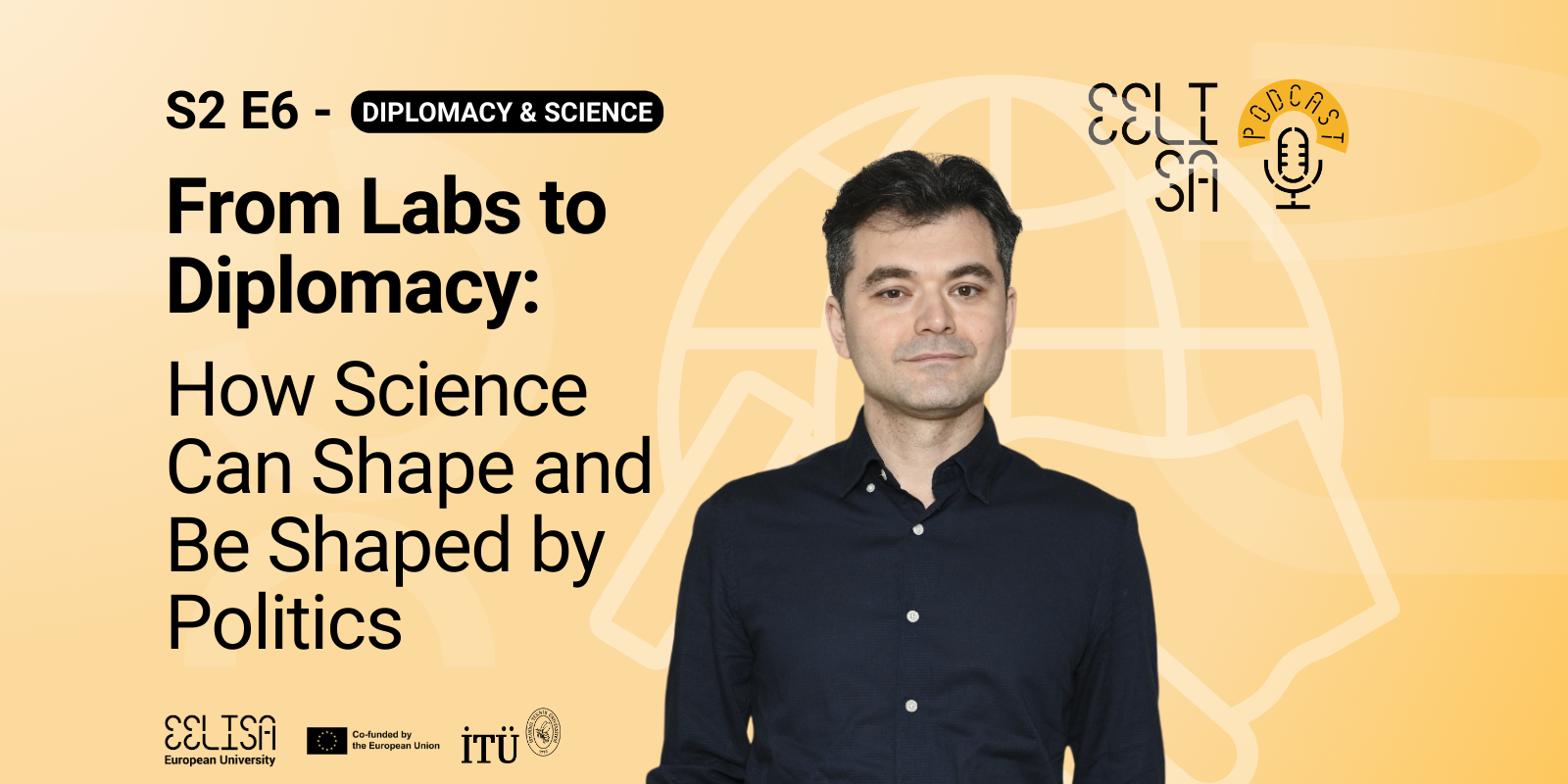
In this episode of the EELISA 2.0 Podcast, Dr. Merve Çalımlı Akgün, Lecturer in Political Science and International Relations at ITU interviews Dr. Alper Yurttaş, Lecturer at ITU and Office Coordinator at ITÜ Ginova, to die into the Science Diplomacy topic from both a practical and academical pont fo view.
Why is Science Diplomacy so important?
While the term has gained prominence over the past 15 years, the practice itself has a much longer history. Science diplomacy operates at the intersection of scientific collaboration and foreign policy, helping address global challenges that no single country can solve alone. However, there is an important tension within the field: the balance between global cooperation and national interests.
“Science diplomacy indeed has has two fundamental aspects. The first one is based on the narrative that many of the global challenges, including climate change, energy and public health need international collaboration and no single country can adequately address these challenges alone. This underpins the increasing significance of SD. But according to the other aspect which approaches SD from a nation centered perspective, SD can be used as a tool for protecting and enhancing national interests”. Yurttaş explains. “I believe that the convergence of these two approaches increases the chance of success for science diplomacy initiatives”.
Universities and Alliances as New Diplomatic Actors
While states remain at the center of Science Diplomacy, there are many other emerging actors that play an increasingly influential role in this discipline, Higher Education Institutions being one of them. Dr. Alper Yurttaş emphasizes their role serving as alternative channels of cooperation, as they naturally foster collaboration, intercultural dialogue, and trust. At the same time, he cautioned against placing excessive political expectations on researchers themselves.
“What EELISA does is bring together institutions from different political, cultural and regulatory environments. It naturally cultivates diplomatic skills, negotiation, intercultural communication, problem solving, and trust building. In that sense, I think EELISA is a living laboratory of science diplomacy”.
He believes in the long-lasting impact of these connections, which will be rooted over time. However, Yurttaş stressed the importance of allowing these dynamics to develop organically, warning against the risk of overburdening scientists with roles they were never meant to carry.
Alper Yurttaş
He is the Office Coordinator at the ITU Entrepreneurship Center, commonly known as ITÜ Ginova. He holds a PhD in European Studies and previously served as a Research Fellow at FAU at the Chair of Science, Technology and Gender Studies under the supervision of Prof. Dr. Maria Rentetzi. During this period, he significantly advanced his work on science diplomacy. He is also one of the EELISA Voices, a group of field experts that represent the core values of the Alliance.

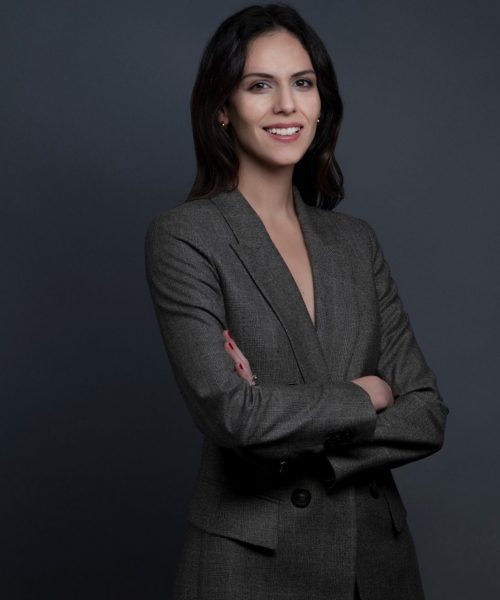
Merve Çalımlı-Akgün
She is a Lecturer at Istanbul Technical University and has been working in several administrative positions at the rectorate level in areas of internationalization, global engagement and communications since 2011. Her recent role involves being a researcher for the Center of Excellence on Education where she works on innovative learning pedagogies, with underlying motivation to align with sustainable education. Dr. Çalımlı-Akgün holds a PhD in Political Science. During her doctoral studies, she was a Visiting Researcher at Universita di Bologna under a cotutelle agreement, and a research fellow at FGV Sao Paulo.