
To mark the International Day of Women and Girls in Science (IDWGS), EELISA hosted its 5th Roundtable, bringing together colleagues from across the Alliance to reflect on how universities can advance gender equality, diversity, and inclusion through concrete institutional practices. The session, titled “From local action to European Impact: advancing gender equality, diversity, and inclusion through grassroots initiatives in EELISA”, created a space to explore how European policy frameworks are translated into meaningful change at the local level.
For Anca Mihalache, lecturer at Paris-Saclay University and Gustave Eiffel University, and engaged in equality and inclusion work at PSL within the EELISA Alliance, the roundtable offered an opportunity to connect her academic interests with institutional practice.
I joined the 5th 2026 EELISA roundtable because one of my interests is exploring how research and education can contribute to the SDGs, including the SDG 5 on gender equality. Across Europe, universities are expected to translate policies and frameworks into institutional strategies and practices. As someone engaged in equality and inclusion work within the EELISA alliance via the PSL university, the roundtable was an opportunity to understand how colleagues in different institutional contexts are making that translation. The tone of the roundtable was that while European frameworks matter, transformation begins at the local level, as policies risk becoming disconnected when they are not grounded in institutional realities and when they do not take into account the perspectives of those they are intended to serve.
The roundtable, titled “From local action to the European level: advancing gender equality, diversity, and inclusion through grassroots initiatives in EELISA”, brought together colleagues from ZHAW Zurich University of Applied Sciences, Friedrich-Alexander-Universität Erlangen-Nürnberg, POLITEHNICA University of Bucharest, and Universidad Politécnica de Madrid, and it put the emphasis on topics such as HR strategies to ensure transparent and bias-sensitive procedures, local awareness campaigns or distributed leadership – for example, many initiatives at UPM, at FAU, at ZHAW or at Politehnica emerge locally and are later integrated into broader strategy, a dynamic which ensures that measures are grounded in experience, that ideas born from experience are scaled into institutional practices and that lived experiences find an echo in policy adaptation. The roundtable also confirmed that the challenges faced by EELISA member institutions are largely shared. These challenges include, for example, infrastructural constraints and the impact of political shifts.
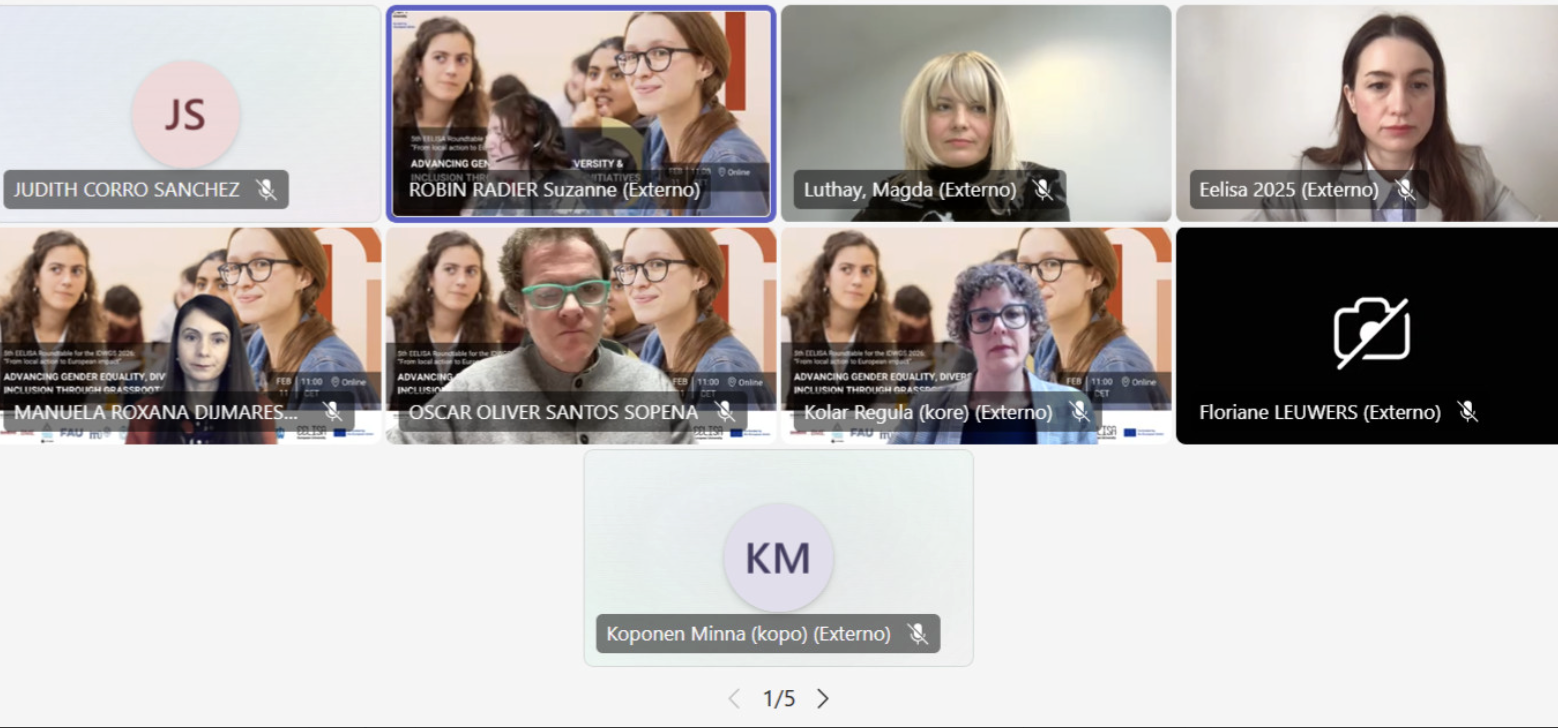
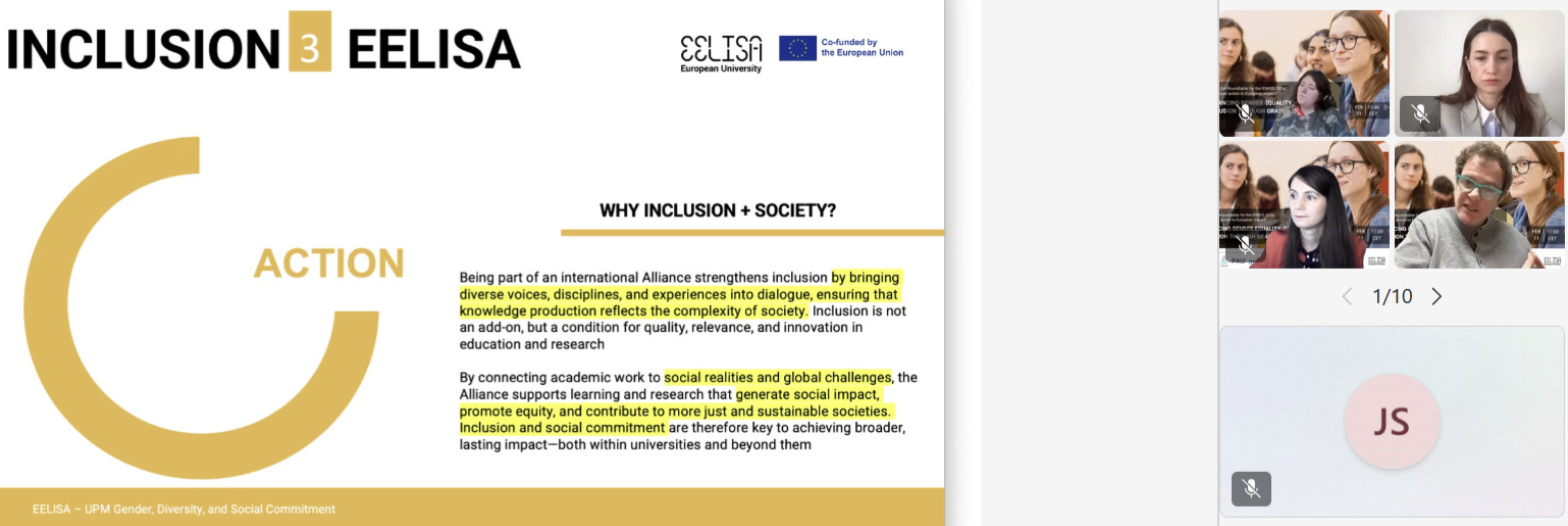
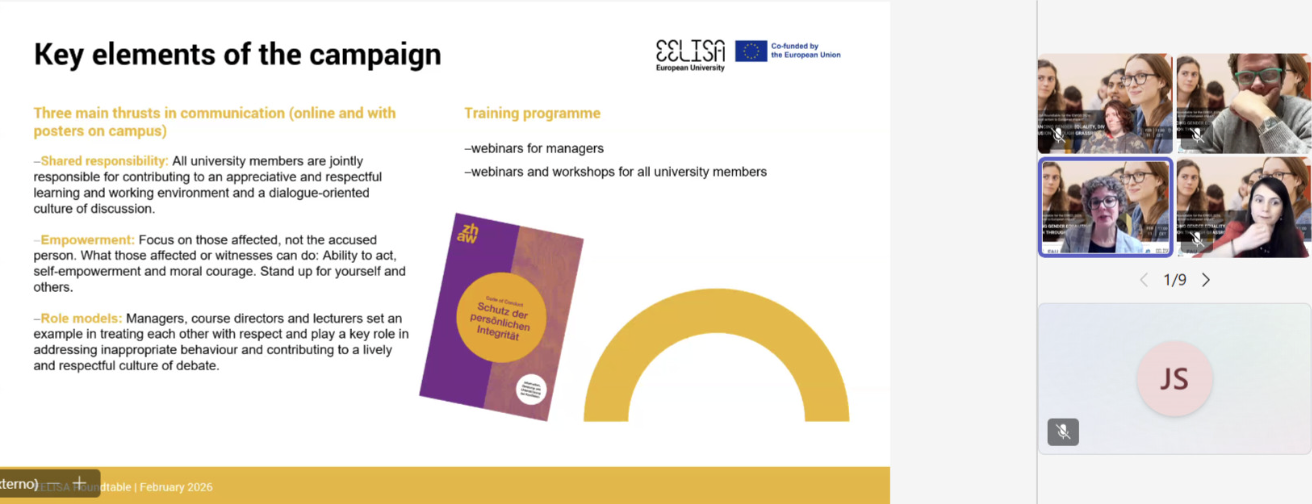
These types of initiatives, made possible by the Communication central office in Madrid, create a space for dialogue, render visible the local initiatives at a larger level, foster mutual learning – for example, local initiatives in Bucharest, Zurich, Erlangen or Madrid can be replicated in other EELISA institutions – and strengthen legitimacy for the topics which are to be included in current or future policies related to equality and inclusion.

Anca Mihalache holds a PhD in Philosophy, obtained at the Paris 1 Panthéon-Sorbonne University in Paris, and an MA obtained at the Ecole Normale Supérieure (ENS Ulm). She is currently a lecturer at the Paris-Saclay university and Gustave Eiffel university. At the PSL university, she works on gender equality and inclusion within the EELISA Alliance. Her broader interests focus on the role of education and research in contributing to the achievement of the Sustainable Development Goals.