
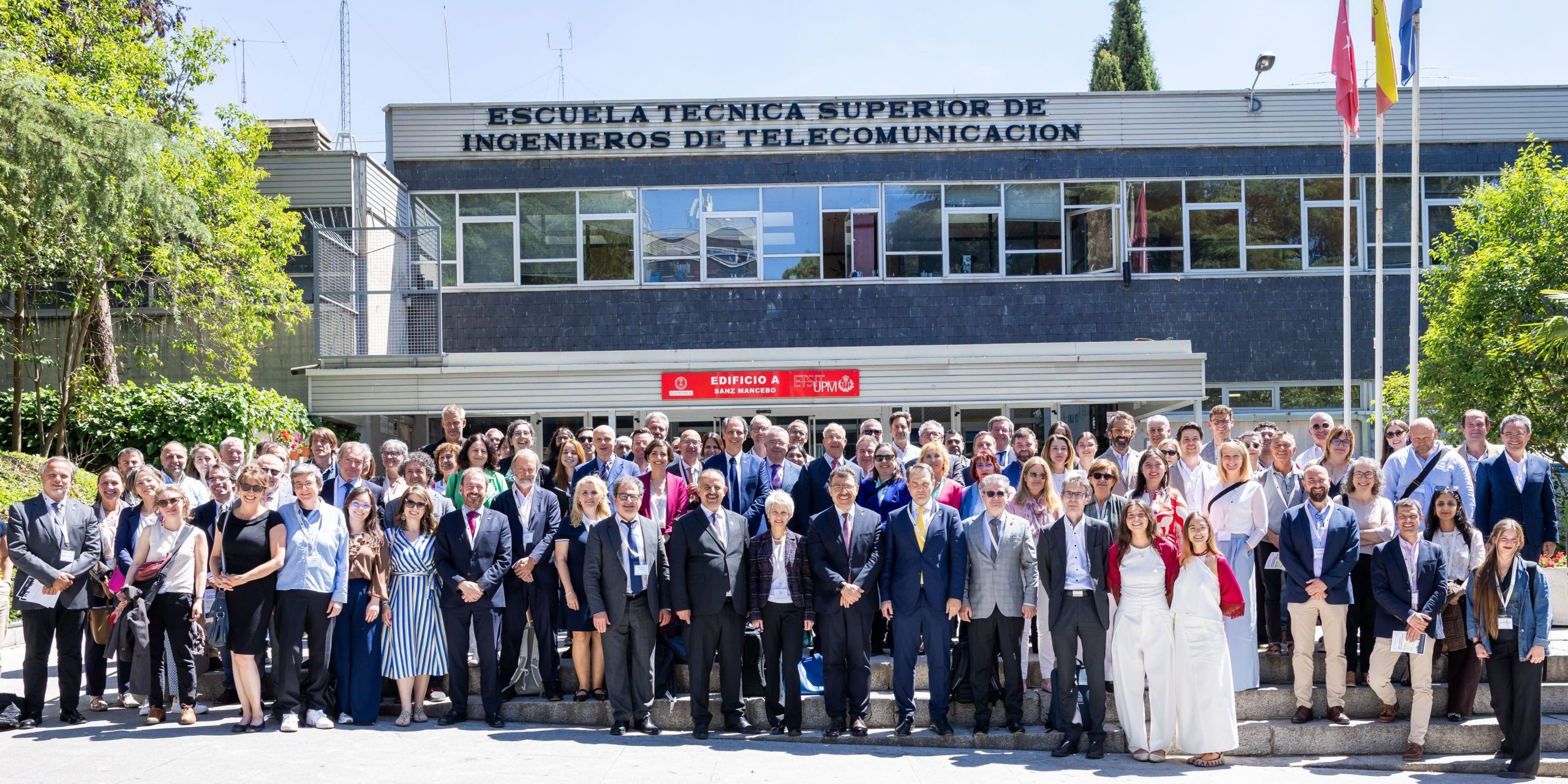
Few working events begin with the energy and enthusiasm experienced last week at the opening of the EELISA Governing Board Meetings in Madrid.
Nearly one hundred participants filled the auditorium of the Higher Technical School of Telecommunication Engineering (ETSIT) at Universidad Politécnica de Madrid to attend the handover ceremony that officially launched two intensive days of strategic discussions and decision-making for the future of the Alliance.
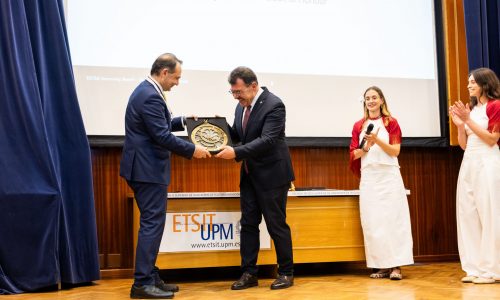
The ceremony featured two exceptional masters of ceremonies: UPM students Martina Sáenz de Miera and Azul Snaider. With warmth and humour, and through a script filled with references to the transformative potential of EELISA for students, they invited each speaker onto the stage.
Following the welcoming remarks by ETSIT Director Manuel Sierra, the outgoing Chair of the EELISA Governing Board (November 2025 – April 2026) ITU Rector Hasan Mandal took the stage to share reflections and insights from his six-month chairship. He then formally welcomed the incoming Chair of the EELISA Governing Board (May – October 2026), UPM Rector Óscar García Suárez, presenting him with an astrolabe as a symbol of curiosity and determination. In return, the new Chair invited Rector Mandal to sign the EELISA Book of Honor, leaving a message for posterity.
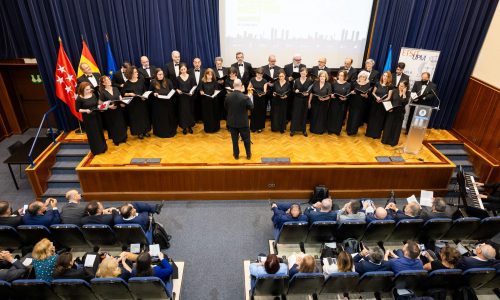
The ceremony concluded on a distinctly Madrilenian note with a musical performance by the UPM Choir, who interpreted several traditional “Zarzuela” pieces, followed by a final group photograph.
Setting the course of a sustainable alliance
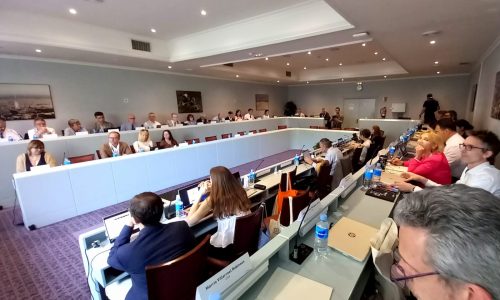
This ceremonial opening gave way to working sessions focused on strengthening the implementation and long-term sustainability of the Alliance. Throughout the meetings, the Governing Board worked on reinforcing the commitment of Rectors, Presidents and Directors to support the institutionalisation of EELISA and its achievements, while also preparing the Alliance for EELISA 3.0 and a deeper level of institutional integration.
The first day of meetings opened with two important decisions – the renewal of the mandate of non-executive EELISA President Dale Martin until the completion of EELISA 2.0, and the appointment of Christian Lerminiaux, former Director of Chimie ParisTech-PSL and President of ParisTech, as the new EELISA Executive Vice-Chair for Academic affairs, a position that replaces the figure of EELISA Dean of Studies.
Another major milestone was reached with the approval of the new EELISA Sustainability and Financial Model. This decision paved the way for Governing Board members to approve the creation of the future EELISA legal entity, whose formal structure will continue to be developed over the coming months.
Envisioning EELISA 3.0
The second day began with a comprehensive review of the Alliance’s progress in relation to the four pillars established in the EELISA 2.0 Mission Statement.
Participants highlighted the operational consolidation of the hub-and-spoke governance model, the strong alignment with European policy priorities, and the development of six European Degree initiatives, among other actions. The discussions also underscored the growing impact of the Alliance through the 76 active EELISA Communities, with over 100 implemented challenge-based activities, and the engagement of more than 6.750 students, staff and faculty members across partner institutions.
The Governing Board also engaged in a collective reflection on the future of the Alliance and the preparation of EELISA 3.0. Discussions focused on the concrete transformations already taking place within member institutions, the expected outcomes by the end of EELISA 2.0, and the institutional and strategic elements that should remain beyond the current phase of the consortium.
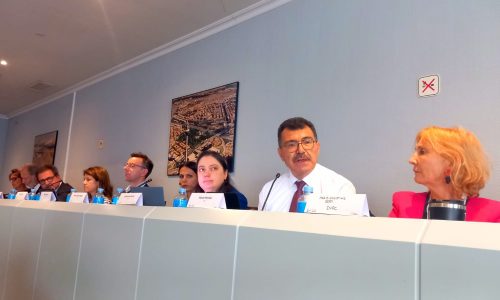
Continuing this reflective approach, an “EELISA Prospective Roundtable” was launched. This panel gathered distinguished international experts including Wendy Purcell, Professor at Rutgers School of Public Health and former researcher on global leadership in Harvard University, and Rigas Hadzilacos, Head of École Polytechnique Fédérale de Lausanne EPFL Extension School.
The discussion explored major challenges facing European higher education, including institutional transformation in times of volatility, artificial intelligence, demographic pressures, and increasing industry expectations. Participants reflected on the difficult changes universities may need to undertake for EELISA to become a solid European talent and innovation ecosystem, while also considering which institutional structures may need to be redesigned for the future.
Signature of important strategic joint statements
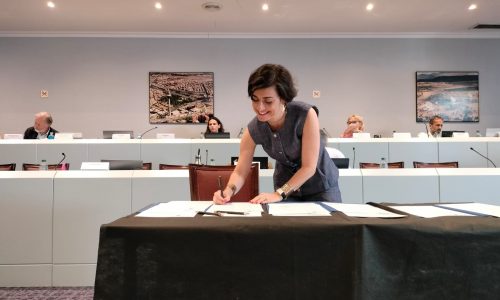
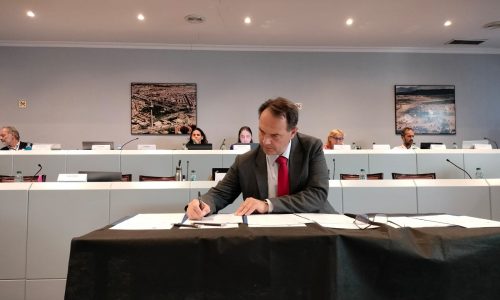
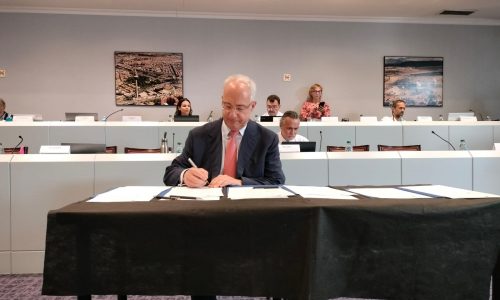
The meetings also included the signature of important strategic documents, such as the EELISA Declaration on Advancing Open Science, and the Joint Statement on EELISA Communities.
In the first declaration, the leadership board committed to advancing Open Science through four key priorities: promoting open access and effective research data management, strengthening Open Science skills and education, fostering fair and responsible research assessment, and enhancing citizen and societal engagement. To support these goals, EELISA will develop shared infrastructures and services, align institutional policies, expand training and capacity-building initiatives, and promote continuous monitoring and improvement across the Alliance.
Through the second signed statement, the Governing Board reaffirmed EELISA Communities as a strategic initiative of the Alliance and renewed its commitment to strengthening this shared ecosystem. Member institutions pledged to increase institutional support and visibility for the Communities, encourage leadership and participation across disciplines, and further empower students by supporting student-led initiatives and ensuring their voices are represented in governance. The Board also stressed the importance of building stronger partnerships with industry, public institutions, and civil society to increase the impact and quality of EELISA Communities’ activities.