

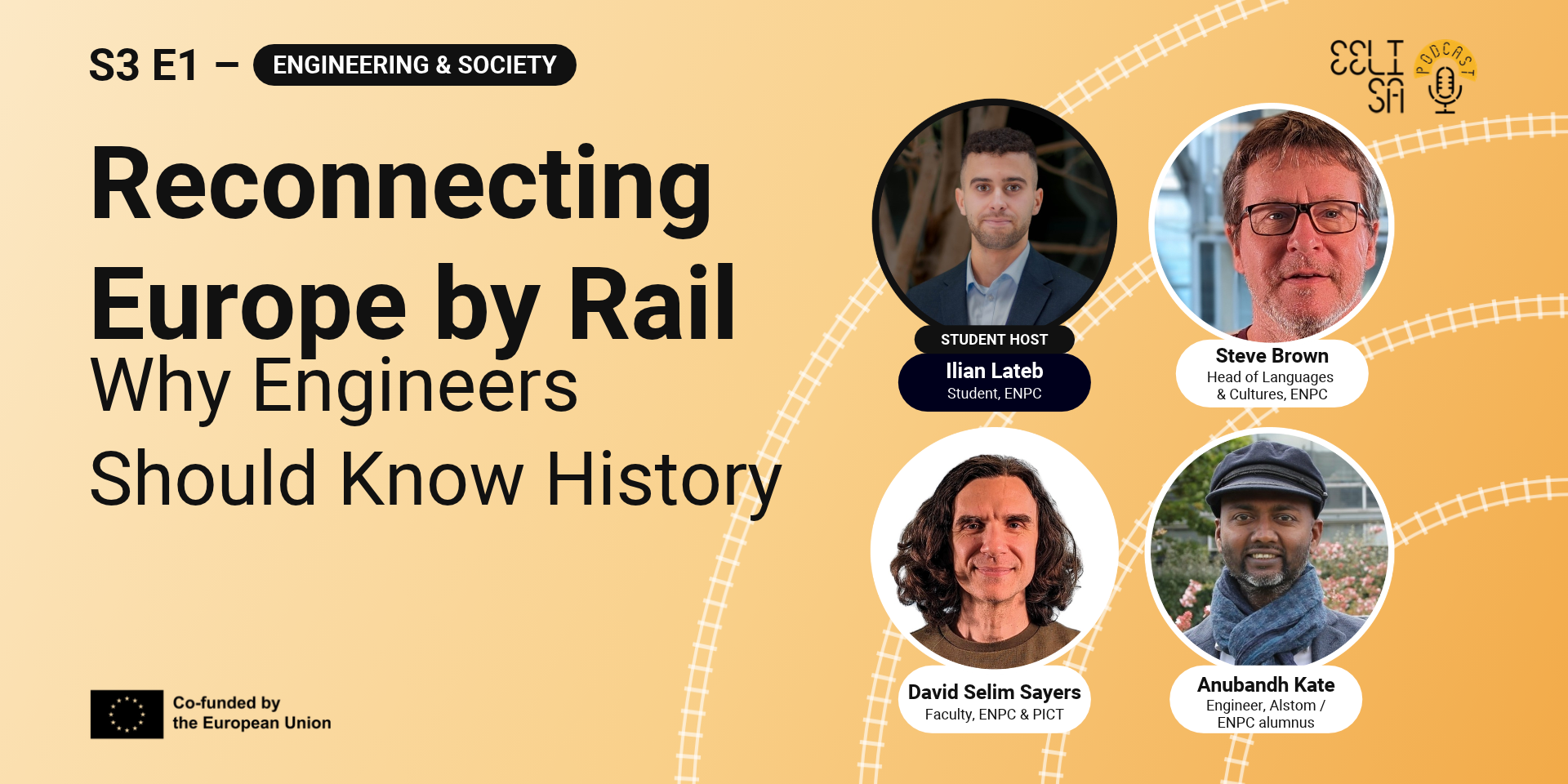
Railways have shaped Europe’s landscapes, economies and the way its people move and meet. Today, with the climate crisis pushing for cleaner and more affordable ways to travel, rail is back at the centre of the conversation about Europe’s future, for both passengers and freight.
But building better railways is not only a technical question. Every line, corridor and station is also a political, social and historical choice, and the engineers who design them need to understand that context as well as the technology.
In the first episode of Season 3, École nationale des ponts et chaussées’ student Ilian Lateb talks with Steve Brown, David Selim Sayers and Anubandh Katé about what rail means for Europe, and why history and the humanities belong in engineering education.
Can rail bring Europe closer together?
The EU’s trans-European transport network plans nine corridors across the continent to improve cross-border connections and bring regions closer together. Projects like Rail Baltica, the Lyon–Turin line and the Brenner Base Tunnel show what collective European investment can look like. For Anubandh Kate, this infrastructure matters, but only as part of a bigger picture:
Railway infrastructure can contribute to a sense of European belonging, but it cannot do it on its own. It can be an enabler.
By making it easier to study, work and travel in other countries, rail gives people the chance to build a personal connection with other cultures. The idea of corridors is not new either. As Steve Brown explains, 19th-century archives from ENPC’s Fradet project show how railway networks were already reshaping Ottoman Europe, turning agrarian landscapes into market towns.
Looking ahead, the guests see a more integrated European network, a return of night trains and more freight moving to rail. They also point to the challenges: reopening branch lines, and the high costs and governance problems that come with large infrastructure projects.
Why engineers should know history
At ENPC, the Fradet project puts 19th-century railway documents in the hands of engineering students. For David Selim Sayers, this kind of work gives future engineers two things: the context to question what their projects are for, and the ability to deal with ambiguity, where there is no single right answer.
We’re not just training engineers at a place like École des Ponts. We’re training decision-makers.
For Ilian, who took part in the project with students from Istanbul and Madrid, it was a surprise in more ways than one. Working on an archive was something he never expected to do as an engineer, and the documents changed how he saw Europe’s past: alongside the wars, there was a long history of countries sharing technical knowledge and working together on railways.
Ilian Lateb

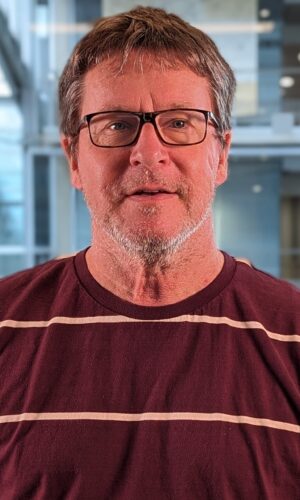
Steve Brown
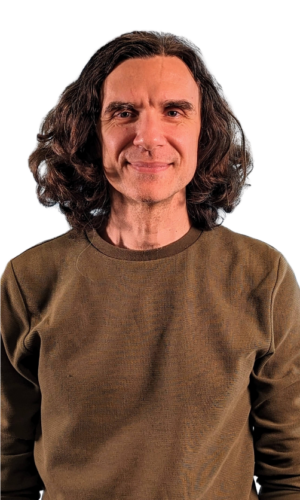
David Selim Sayers
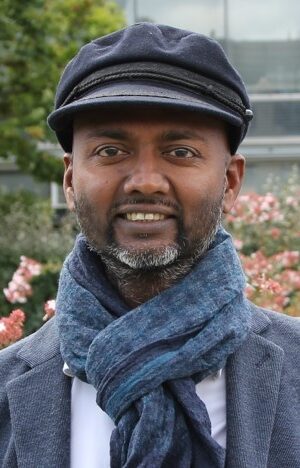
Anubandh Katé