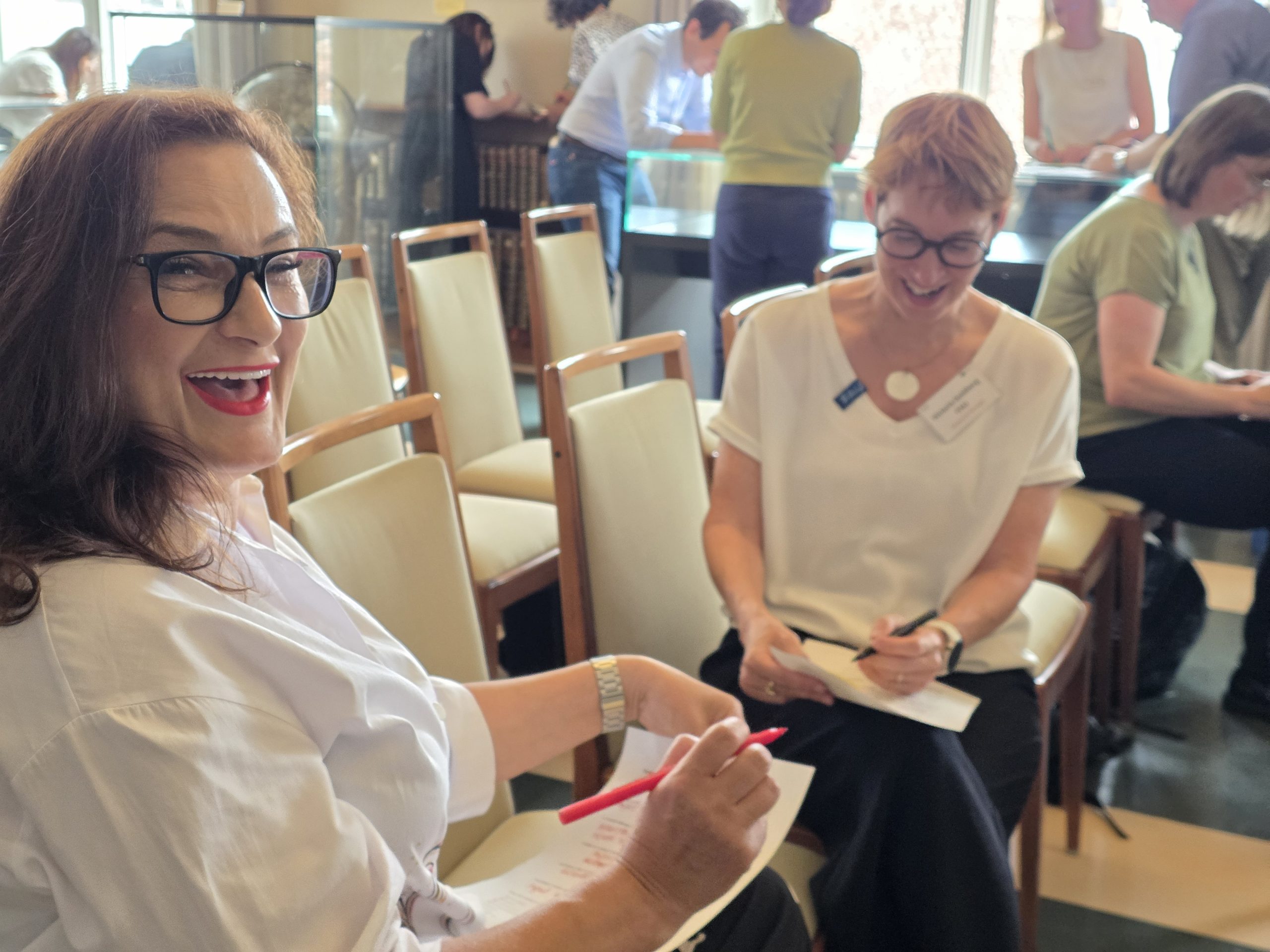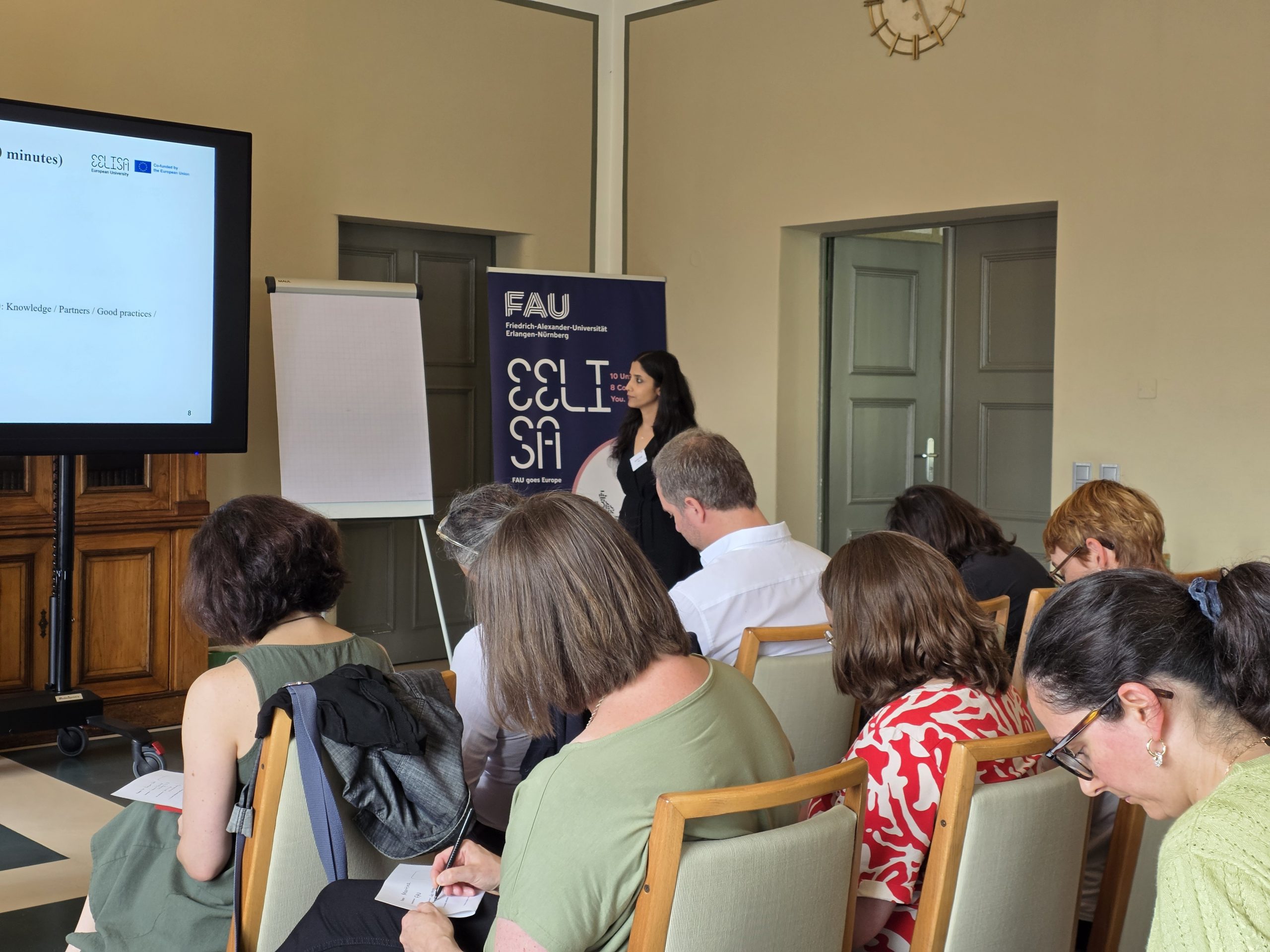

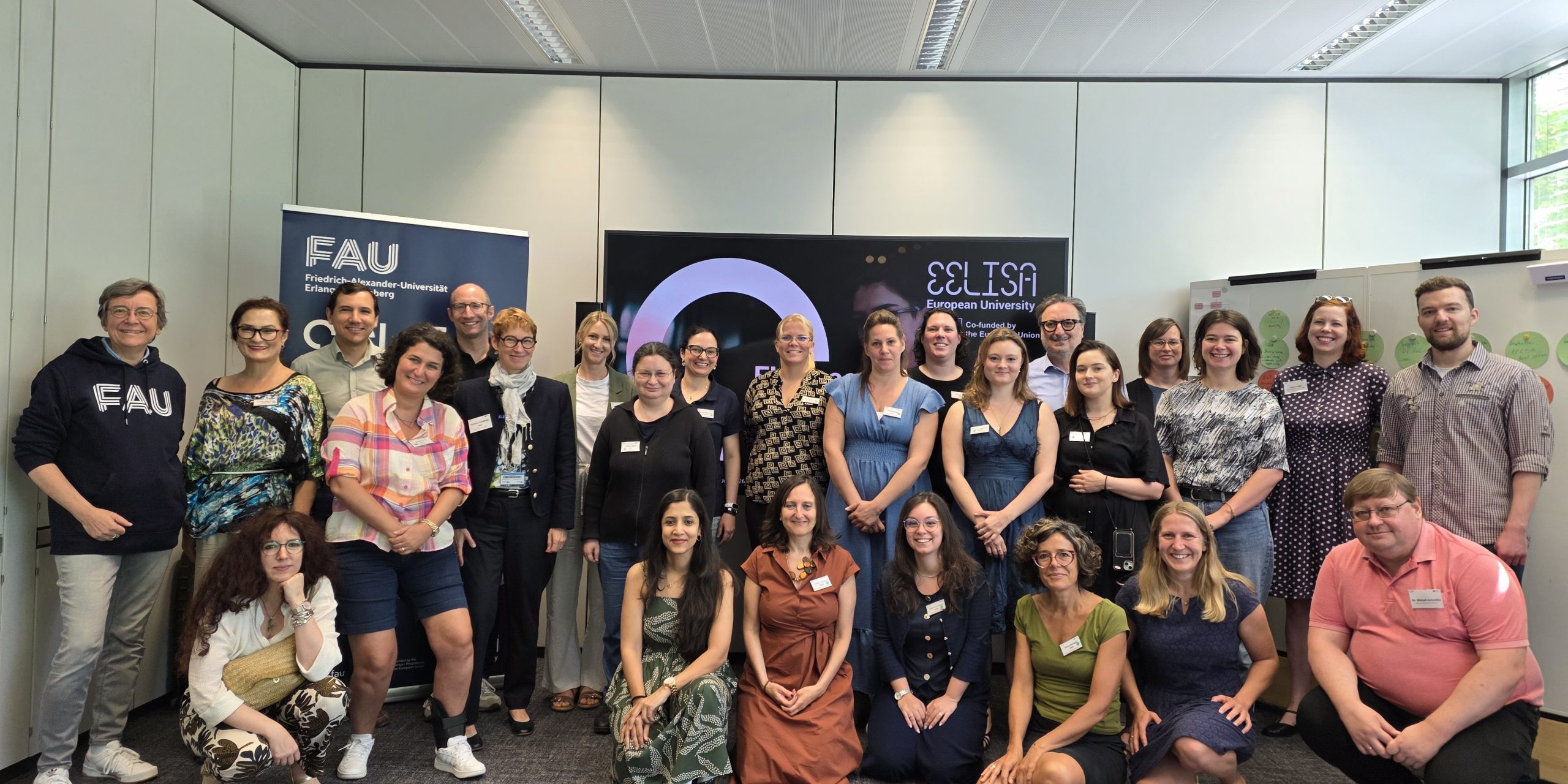
From July 8–10, 30 research managers from all ten EELISA partner universities met at FAU to share best practices, learn more about AI in proposal preparation, and work together on ways to strengthen cooperation within EELISA. The participants, who advise researchers at their home universities on EU proposal submission and implementation, as well as several WP9 members, travelled to Erlangen for the three-day event, which was organised by Victoria Goldberg from FAU’s EELISA team.
In addition to introducing each university’s research support system, the group also held two focused sessions on how their collaboration can be improved in the future: one on potential joint services among the EU Research Offices within EELISA, and one on how EU proposals between EELISA partners can be better supported. During this exercise, current processes and pain points were discussed, and the “EELISA Project Portfolio Management Framework” was introduced to participants.
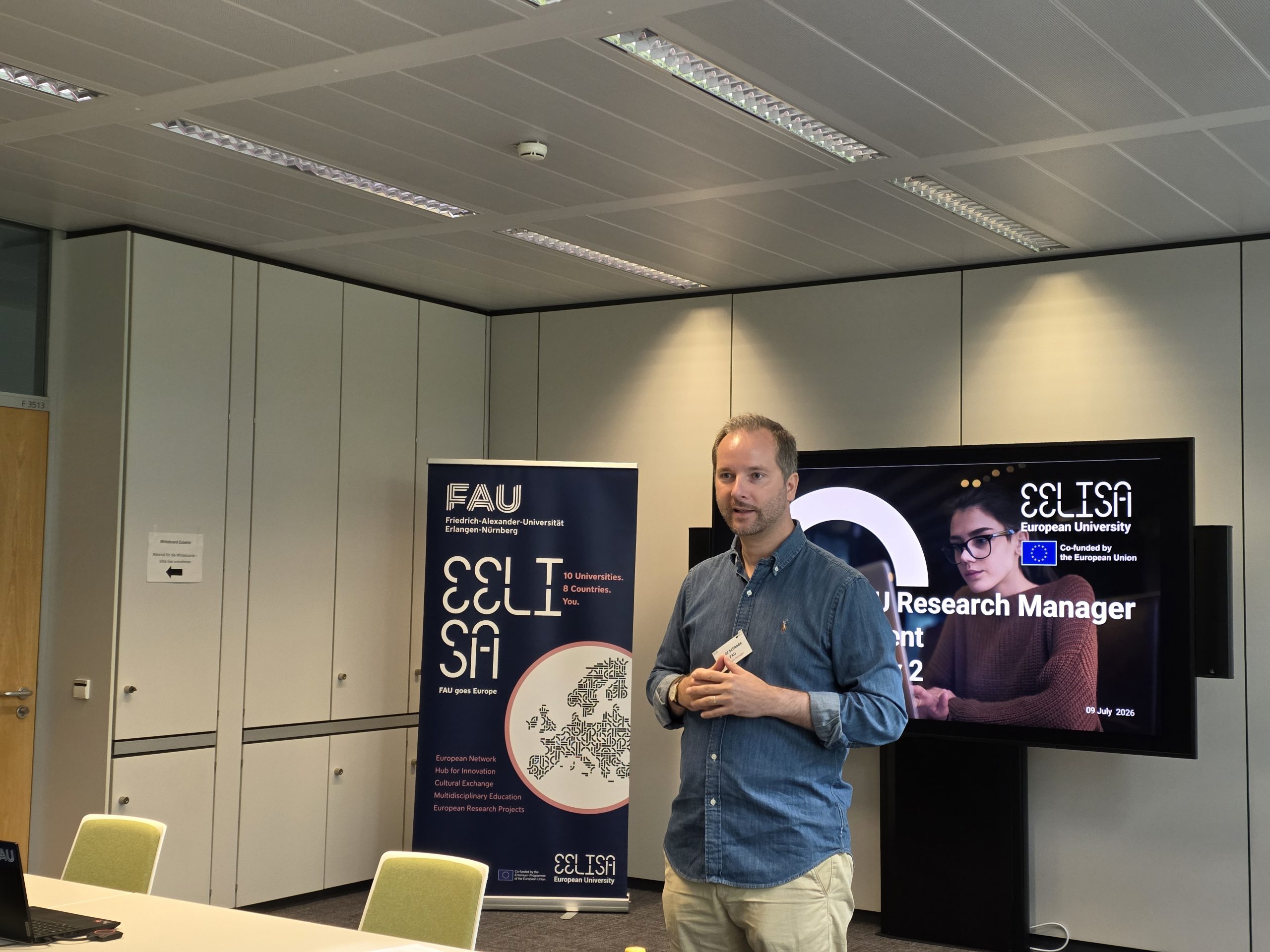
“As many of the participants were not part of the core EELISA team, the framework was not well known. In the workshop, we tried to compare the framework to the processes within each EU Research Office to streamline the process for future calls,” explained David Schkade, a research manager on FAU’s EELISA team.
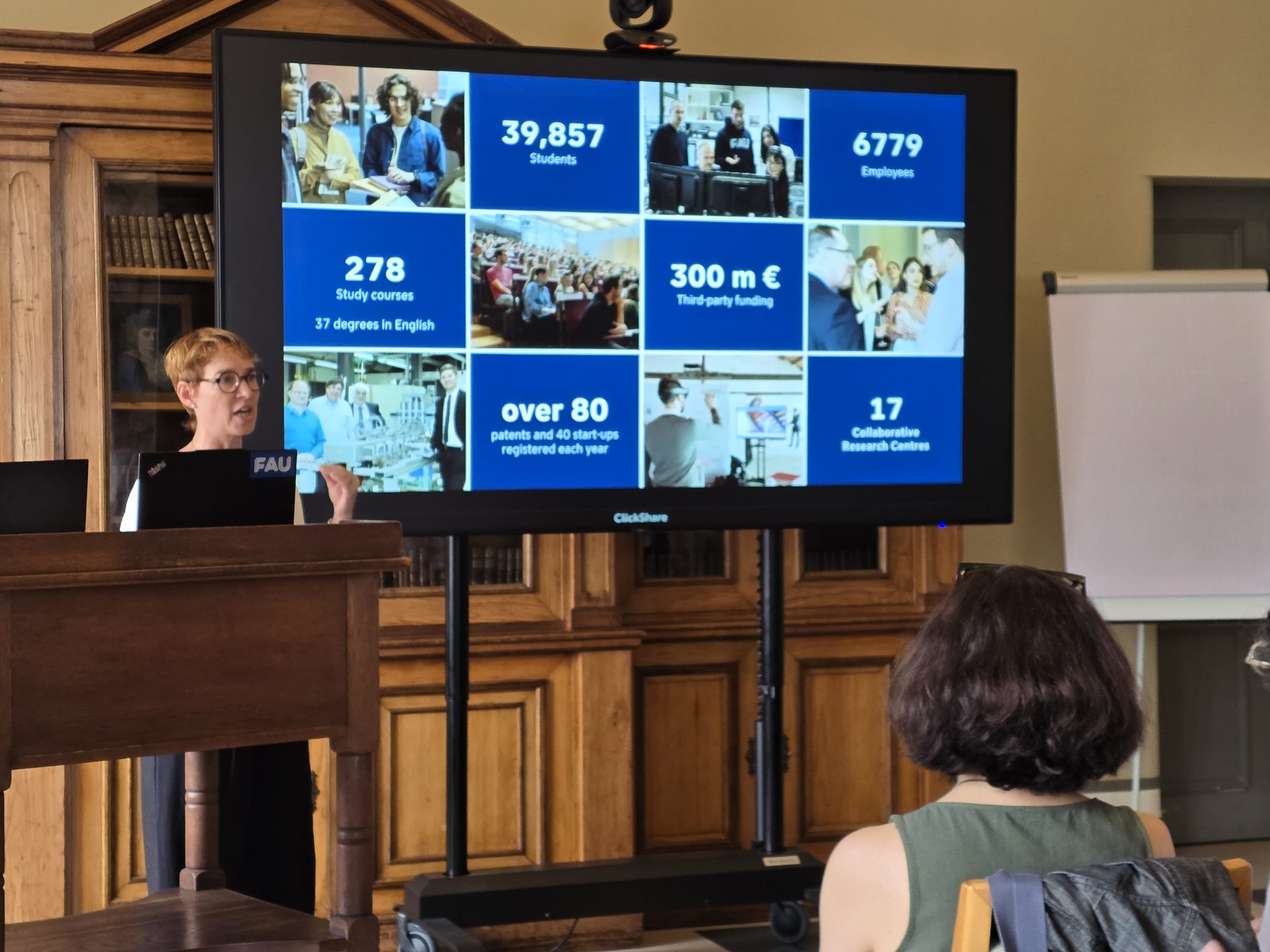
In addition to the exchanges, training was also on the agenda. A total of four expertsfrom the German National Contact Point (NCP) of the Federal Ministry for Research,Technology and Space (BMFTR), the German EU Liaison Office of the Research Organizations (KoWi), and the Bavarian Research Alliance (BayFOR) presented new developments, including an outlook on the new EU Framework Programme (FP10), which from 2028 will define the coming years of the EU research landscape, and how AI ischanging proposal preparation and evaluation.
“There was much discussion about the extent to which declared use of AI in research proposals is assessed, whether the floodof AI-supported proposals will lead to changes in the application format, and whether AI—or ultimately the researchers themselves—can produce the most innovativeideas,” summarized Victoria Goldberg.
“Our goal was to connect the right people so that in the future they can quickly andwith minimal bureaucracy bring researchers together for specific calls,” said Victoria Goldberg. “This works through coordination and close cooperation, but above allthrough lasting relationships.” A shared tour of the Botanical Garden and Entlas Keller, including a beer tasting at the end of the workday, created even more sharedmemories. “We are optimistic about future collaboration! All participants were veryopen and motivated,” said Silke Häusser-Kinzel. “I hope we will see each other againsoon for the training series or the next exchange with another EU Research Office.”