
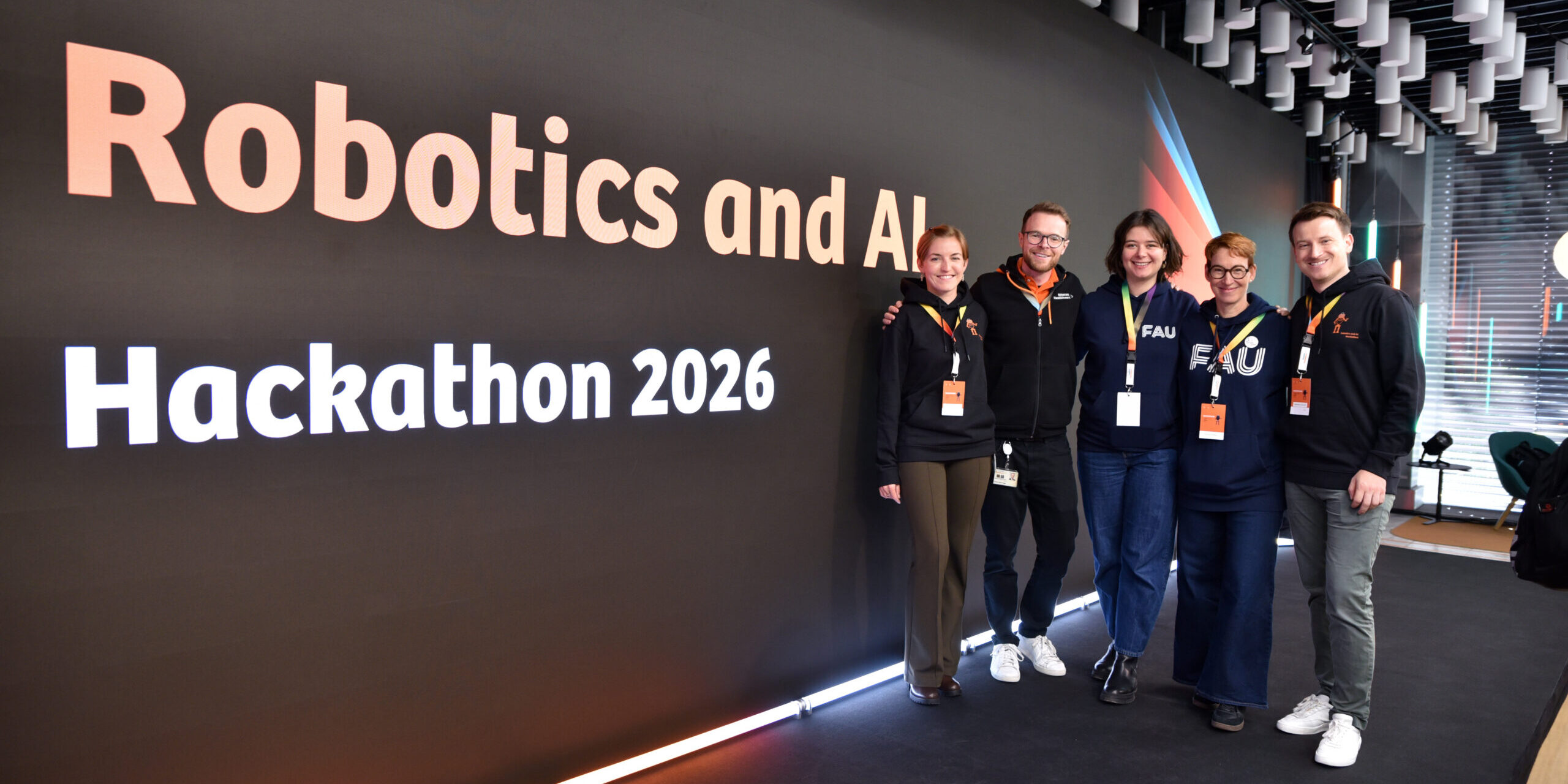
Collaboration between industry and higher education is key for the development of future professionals. Following this idea, EELISA collaborated with its EELISA Partner Club member, Siemens, to organise the first Robotics & AI Hackathon at the Siemens Healthineers centre in Erlangen.
From October 22 to 24 2026, over 130 participants from across Europe took on various challenges in the fields of medical technology, robotics, and artificial intelligence (AI). The event was organized by Sebastian Schroth and Nicolas Butterwegge from Siemens Healthineers, together with the EELISA team at FAU.
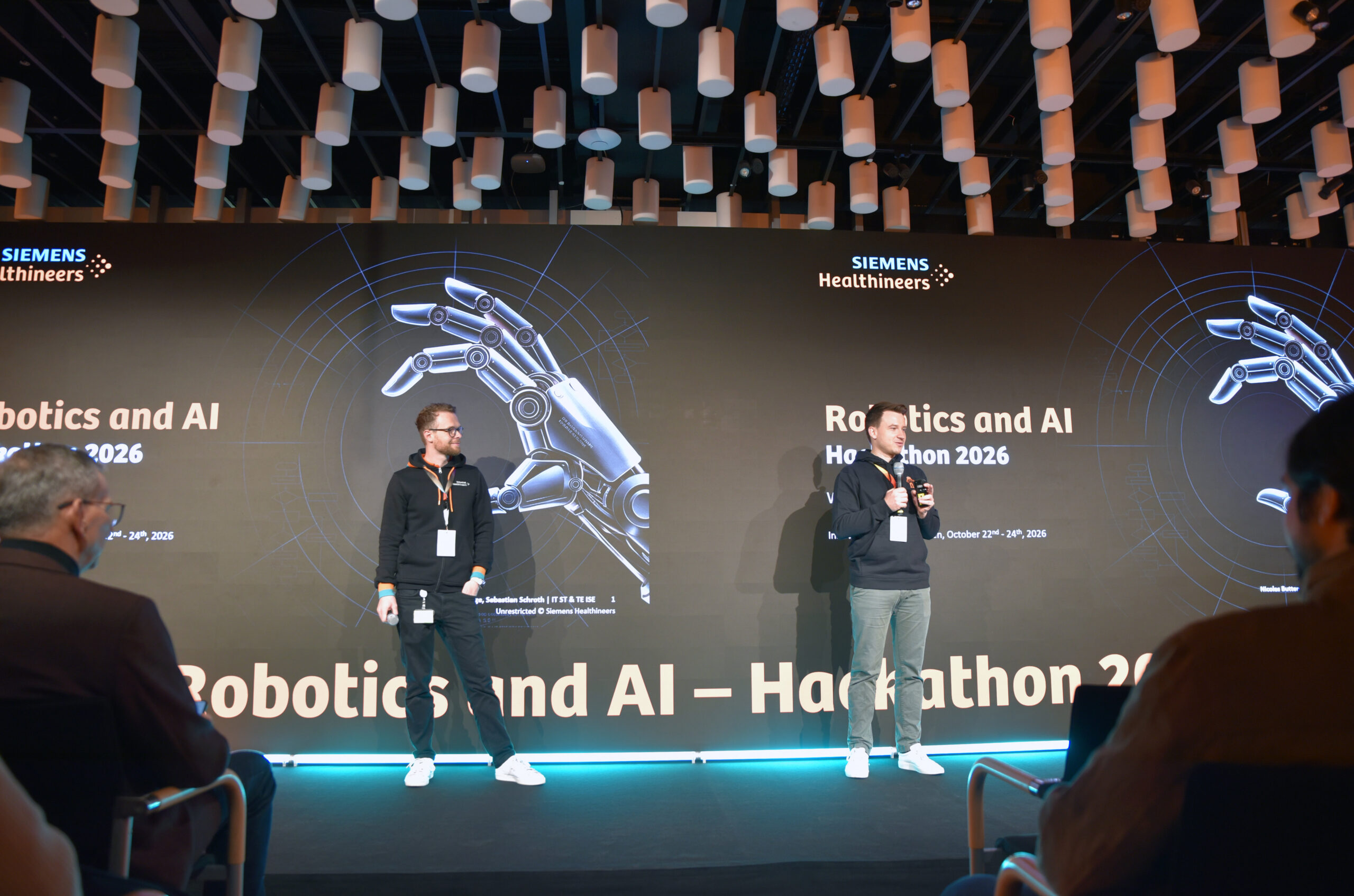
“More than 40 participants travelled from abroad specifically to attend our hackathon in Erlangen. In total, our participants and experts come from more than 27 cities and 11 countries. This diversity is exactly what makes a hackathon successful,” explained Sebastian Schroth, Technology and Innovation Manager at Siemens Healthineers, during the opening ceremony.
Many of the international students travelled from EELISA partner universities in Paris, Pisa, Istanbul, Madrid, and Bucharest. Their academic backgrounds ranged from artificial intelligence, robotics, and data science to healthcare and marketing. Siemens Healthineers CIO Dr. Stefan Henkel also emphasized the importance of this diversity, highlighting how different perspectives foster creativity and enable people to work together to develop new technologies for Europe, within Europe.
The hackathon focused on four challenges from different areas of Siemens Healthineers’ operations: a robotic arm designed to deliver equipment in a sterile operating environment, an intelligent robot to assist patients in preparing for a CT examination, an autonomous, image-guided control system for minimally invasive medical procedures, and AI-based anomaly detection in automated manufacturing.
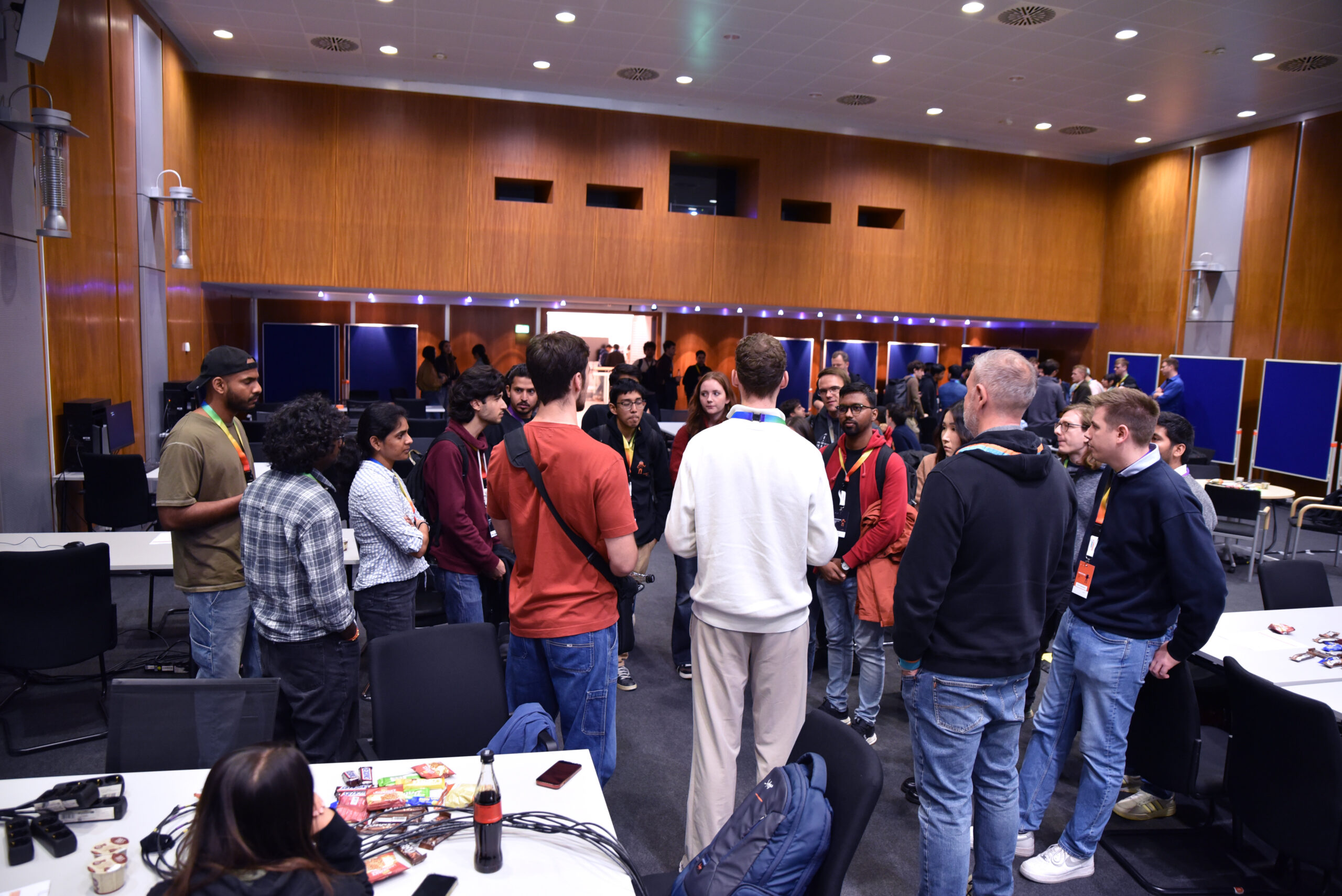
Employees from Siemens Healthineers introduced participants to real-world applications, current challenges, existing solutions, and potential improvements. They provided extensive datasets, as well as hardware and software, for the teams to work with. Among the equipment available to participants were a CT patient table and an autonomous mobile robot that delivered snacks.
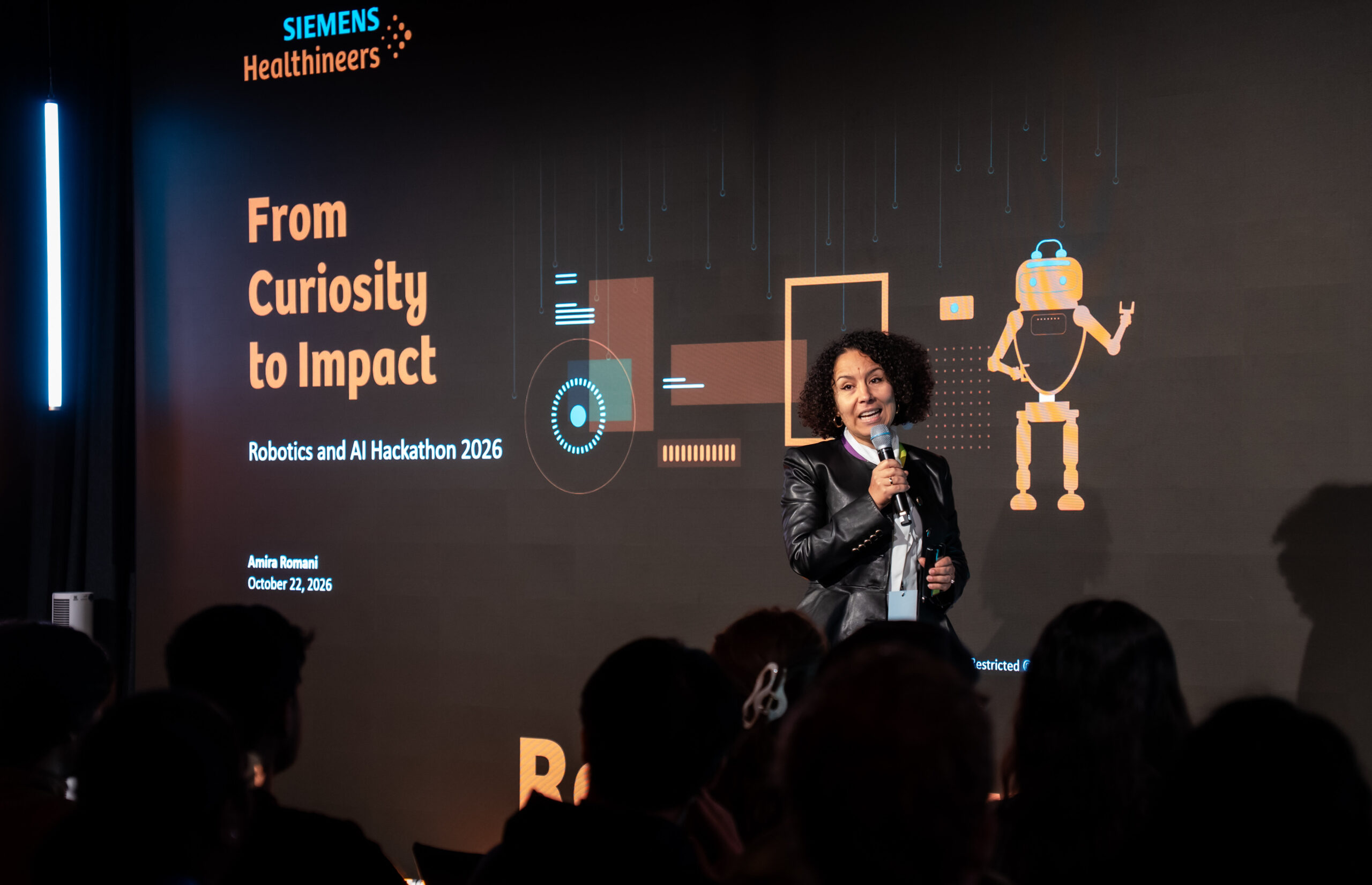
“These are real problems that affect people’s lives,” emphasized Amira Romani, Senior Vice President of Innovation Strategy & Ecosystem and Head of the Healthineers Performance System. Innovative solutions can make a decisive difference in healthcare and, in the best-case scenario, even save lives. While the technology itself is fascinating, its potential impact on society is even more important.
Over the three days, participants worked together in 30 international and interdisciplinary teams, receiving support from mentors at Siemens Healthineers, Capgemini, and FAU. Additional inspiration came from a presentation by Prof. Dr. Andreas Maier entitled “Vibe Coding: Software Engineering in Times of AI,” in which he also introduced new developments in MRI software.
By the second day, the teams had settled into their work, with the main focus on developing their projects. “I know you want to get as much done as possible today,” Sebastian Schroth said in his morning address. “But make sure you also take some time for each other this evening. The connections you build here across national and academic boundaries often last far beyond this hackathon.”
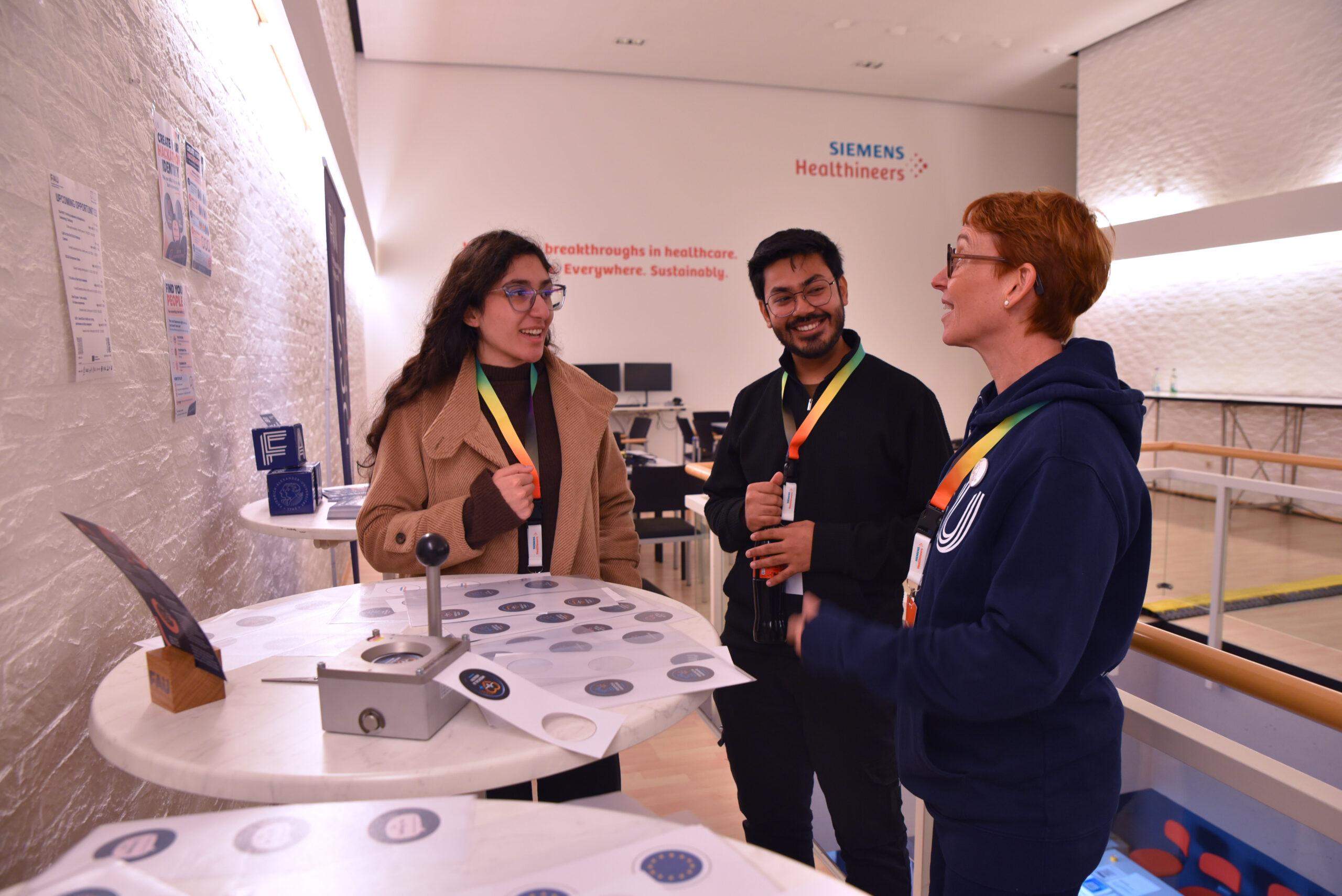
Shonal Fernandes is an example of how lasting these connections can be. While the hackathon was the first EELISA activity for most participants, the PhD student from UPM in Madrid had already gained experience with EELISA.
“A few months ago, I attended a Seasonal School organized by ZHAW in Winterthur, where I also became friends with many FAU students. When I told them I was coming to Erlangen for the hackathon, they immediately invited me out for dinner and offered to show me around their city. Experiences like these make me feel like an ‘international citizen’ – connected everywhere and somehow at home wherever I go.”
The hackathon gives students the opportunity to apply their knowledge in practice while gaining initial insights into the work of a medical technology company and building valuable professional connections. Nicolas Butterwegge, who now works in IT Strategy at Siemens Healthineers, knows this journey firsthand: “I also joined Siemens Healthineers through a hackathon. Now, my colleagues and I have the opportunity to discover new talent through events like this.”
On Saturday, the final day of the hackathon, all teams presented their results in pitches. The nine teams selected for the final round then presented their solutions to a jury. The jury included top managers from Technology & Innovation Management and senior software architects from Siemens Healthineers, as well as a Senior Consultant from Capgemini. FAU Professor Alessandro del Vecchio was also among the jury members.
The team from Pisa, ‘₶-SA – Precision Intelligent Surgical Agent’, impressed the jury most with its innovative solution for endovascular procedures, taking home first place and €1,500 in prize money.Second place went to ‘PatientFirst’, a joint team from FAU and Siemens Healthineers. Third place was shared by two teams: ‘Solo’, representing FAU, and ‘Talos’, an EELISA team featuring students from PSL, ITU and BME.
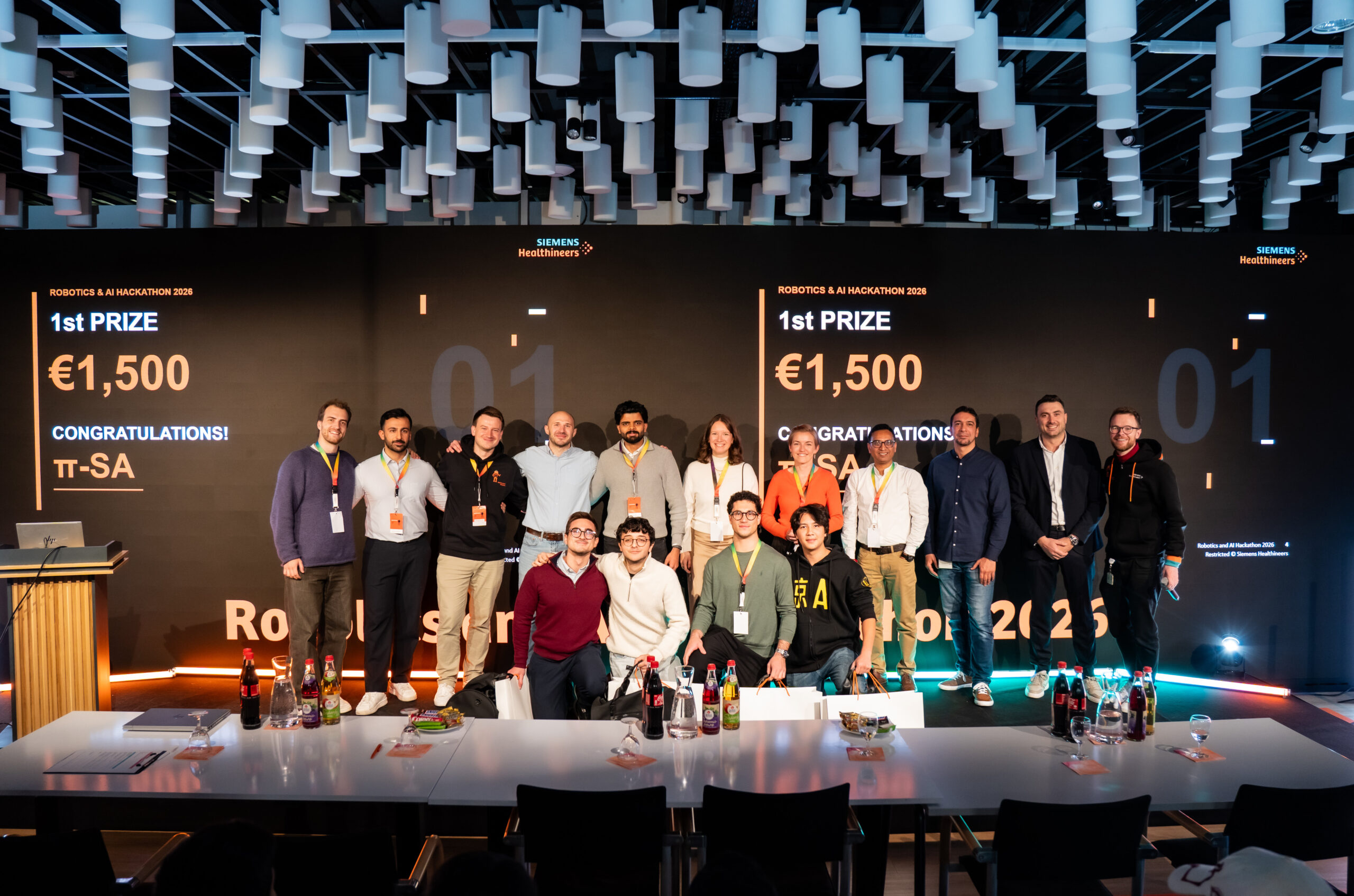
“We want to give students within EELISA the opportunity to explore their fields of expertise in greater depth through challenge-based learning and put their knowledge into practice. Working with partners such as Siemens Healthineers allows us to stay closely connected to the latest developments in the field. That is why we are particularly pleased with this collaboration,” explained Victoria Goldberg from the EELISA team at FAU.
Article written by: Johanna Hojer